The Academic Journey
From engineering foundations to artificial intelligence research.
My move into AI did not begin at graduate school. It developed gradually through engineering projects, independent study, deliberate mathematical preparation, and increasingly ambitious machine-learning work before becoming formal graduate research.
2018 · Early Systems Project
Amazon Alexa Voice-Controlled Robot Car
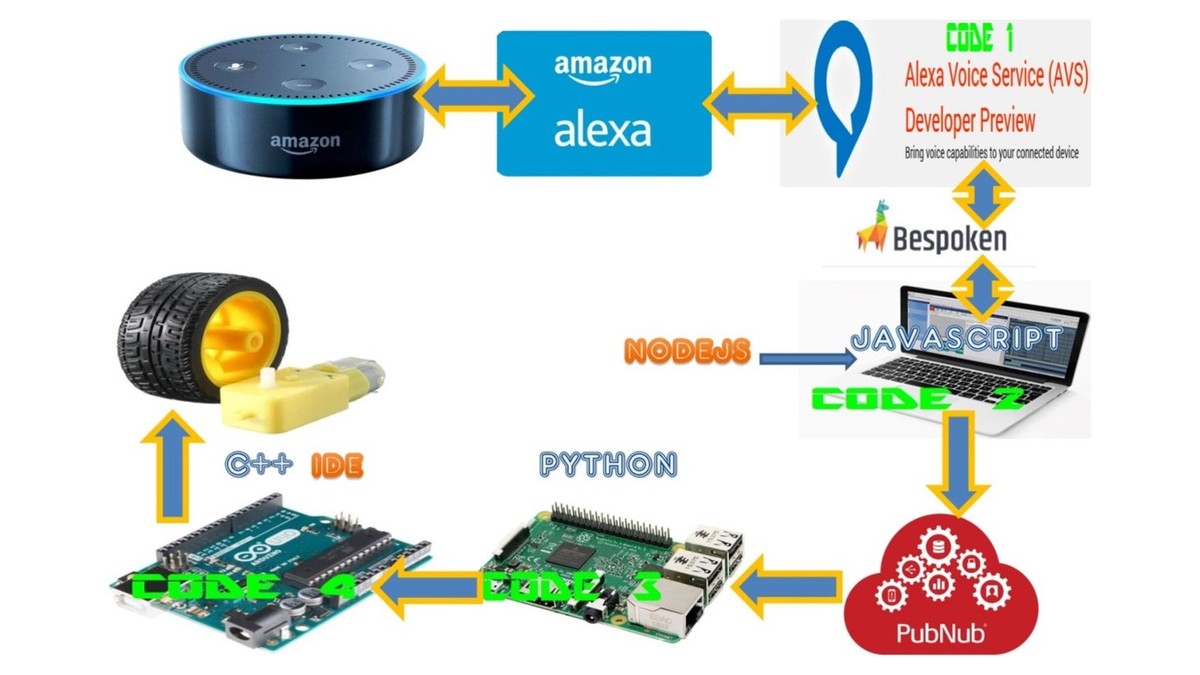
This course project was formally assigned to a four-student team, but I independently implemented the complete technical system. I connected Amazon Echo and Alexa Voice Service to a Node.js skill, PubNub communication, Raspberry Pi, Arduino, and DC motors, with a Bluetooth-control alternative.
Amazon Echo → Alexa Voice Service → Node.js Skill → PubNub → Raspberry Pi → Arduino → DC Motors
1st Prize · MICT Course Project Competition
JavaScriptPythonArduino / C++Raspberry PiAmazon AlexaPubNubBluetooth
summarizeProject brief
2019 · Engineering Simulation & Design
CAD, Simulation & Automotive Aerodynamics
My undergraduate engineering coursework was strongly project-based. In this period I worked with Autodesk Inventor and ANSYS across structural, force, and fluid simulations. One team project compared automotive designs through CFD-based airflow and drag analysis.
These projects were not AI projects, but they developed the modeling, simulation, and iterative engineering habits that later carried into physical AI and robotics work.
Autodesk InventorANSYSCADCFDEngineering simulation
2019–2021 · Preparing for AI
Building the Mathematical Foundations for AI
While studying Intelligent Mechanical Engineering, I realized that moving seriously into AI would require stronger mathematical foundations than my major alone provided. I therefore chose to take a university Linear Algebra course outside my department, through Mathematics Education, specifically as preparation for AI.
The course was more theoretical and mathematics-oriented than my engineering classes. After the professor asked why I was taking it and I explained my goal, she made a particular effort to emphasize topics that would be useful for my preparation. In parallel, I studied Gilbert Strang's Linear Algebra materials independently.
This mathematical preparation developed alongside my independent study in machine learning, statistics, and deep learning and directly preceded my first substantial deep-learning capstone.
2019–2021 · Independent Study
Teaching Myself AI Before Graduate School
My transition toward AI began while I was still studying mechanical engineering. Starting around 2019, I independently studied machine learning, linear algebra, statistics, and deep learning through books, online courses, and small experiments. I later used resources such as Hands-On Machine Learning with Scikit-Learn and TensorFlow while preparing for more substantial AI projects.
I did not have a personal GPU during this period, so Google Colab became an important part of my early experimentation. The goal was not collecting certificates; it was building enough mathematical and practical foundation to move from traditional engineering projects into machine learning.
2021 · Individual Undergraduate Capstone
Implementation of an Artificial Intelligence Model in a Self-Driving Vehicle Using Deep Learning
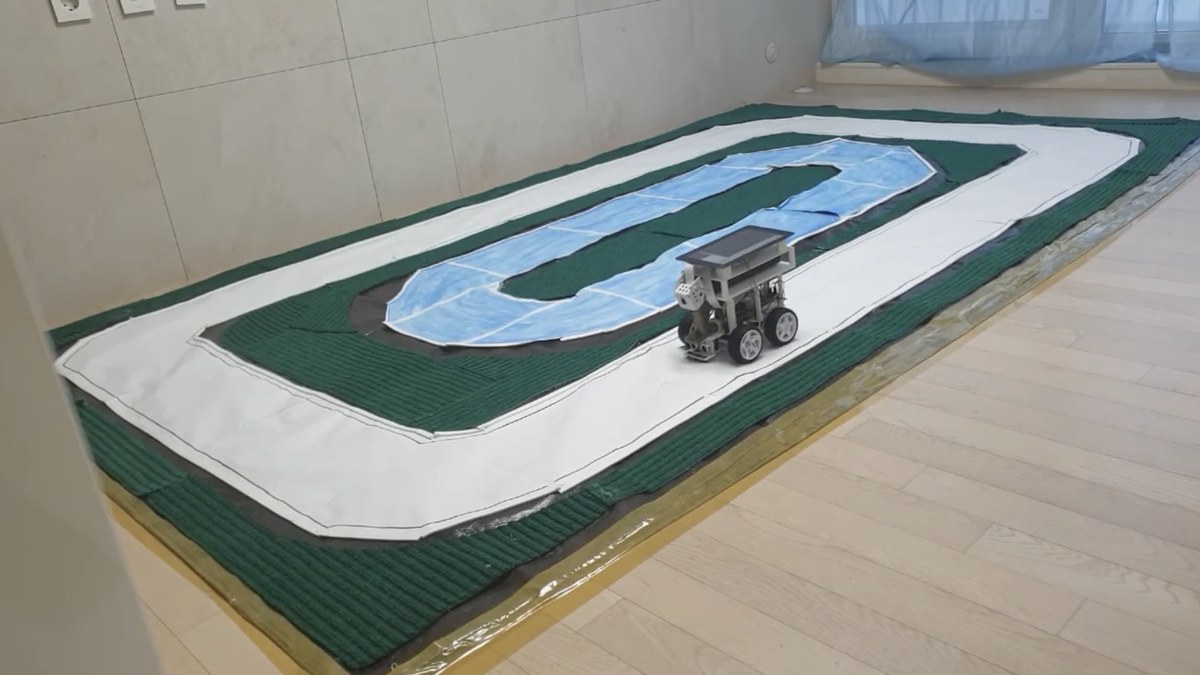
This was my first substantial deep-learning project and the point where my undergraduate work moved decisively toward AI. I deliberately chose an autonomous-driving problem after independently studying machine learning and linear algebra.
The project used a university-funded Picar-X platform and components including a Raspberry Pi, camera, display, battery/power components, and motor hardware. I assembled and configured the platform, completed the required connections and software integration, and designed the custom mounting structure used to support the LCD screen and battery.
The custom holder was designed in CAD, checked through structural analysis in ANSYS, and fabricated through 3D printing before being installed on the vehicle.
I manually drove the vehicle with a gamepad while recording image/action pairs for behavioral cloning, then developed and evaluated the CNN-based driving model used for autonomous track completion.
I began from an NVIDIA PilotNet-inspired CNN and modified the formulation for the small physical setup. Continuous steering regression was changed to three-class left/straight/right prediction; MSE was replaced with a categorical objective; ReLU was changed to PReLU; the convolutional filter progression was reduced from 24/36/48 to 8/16/32; and the first kernel changed from 5×5 to 7×7 while retaining dropout.
Dataset
1,495 training frames · 374 validation frames · 1,869 total frames
Results
Baseline: 65% training / 57% validation · Custom model: 85% training / 81% validation
The physical car completed the test track autonomously.
The experiment used a small dataset and a single physical setup. The reported metrics should be treated as indicative, and the project did not establish generalization to unseen tracks.
Graduate AI Study & Research
Entering UNIST shifted my work from self-directed AI study into formal graduate coursework and research. This period broadened my foundations across deep learning, natural language processing, classical machine learning, probabilistic modeling, and later computer vision and reinforcement learning.
2022 · NLP
Hate Speech Detection with XLM-RoBERTa + CNN
For a graduate NLP project, I explored Spanish hate-speech detection using XLM-RoBERTa representations with a CNN classification head. The project also compared BETO-based approaches and explored multilingual/translated data conditions.
XLM-RoBERTaCNNBETOMultilingual NLPGoogle Colab
summarizeReport
2022 · Advanced Machine Learning
Classical Machine Learning from Scratch
In Advanced Machine Learning coursework, I implemented and evaluated classical machine-learning algorithms without relying on specialized library implementations for the core models. The experiments compared KNN, decision trees, and random forests across Iris, CIFAR-10, and CIFAR-100 while examining accuracy, runtime, validation strategy, and feature representation.
KNNDecision TreesGini impurityRandom ForestIrisCIFAR-10CIFAR-100Hu momentsK-fold validation
2022 · Probabilistic Modeling
Gaussian Process Regression for Inverse Dynamics
A separate Advanced Machine Learning report studied multi-output Gaussian Process Regression on the SARCOS inverse-dynamics problem. The input contained 21 variables—seven joint positions, seven velocities, and seven accelerations—with seven joint torques as outputs.
I compared linear and nonlinear Gaussian kernels using shared hyperparameters across conditionally independent outputs, grid search/cross-validation, MAE evaluation, and Cholesky decomposition for numerical stability.
Linear GP
test MAE ≈ 0.238 · runtime ≈ 51 min
Nonlinear Gaussian GP
test MAE ≈ 0.094 · runtime ≈ 157 min
2022–2024 · Coursework Foundations
Graduate Deep Learning & AI Foundations
Other graduate coursework strengthened the mathematical and implementation foundations behind my later research. Rather than representing one portfolio project, this work included repeated assignments and experiments across modern deep-learning architectures and AI tooling.
PyTorchCNNsGNNsSeq2Seq / LSTMBERT fine-tuningTransformersAttentionVAEs / GANsRayOptimization
2023 · Advanced Computer Vision
Real-Time Human Detection with Multi-Teacher / Multi-Domain Knowledge Distillation
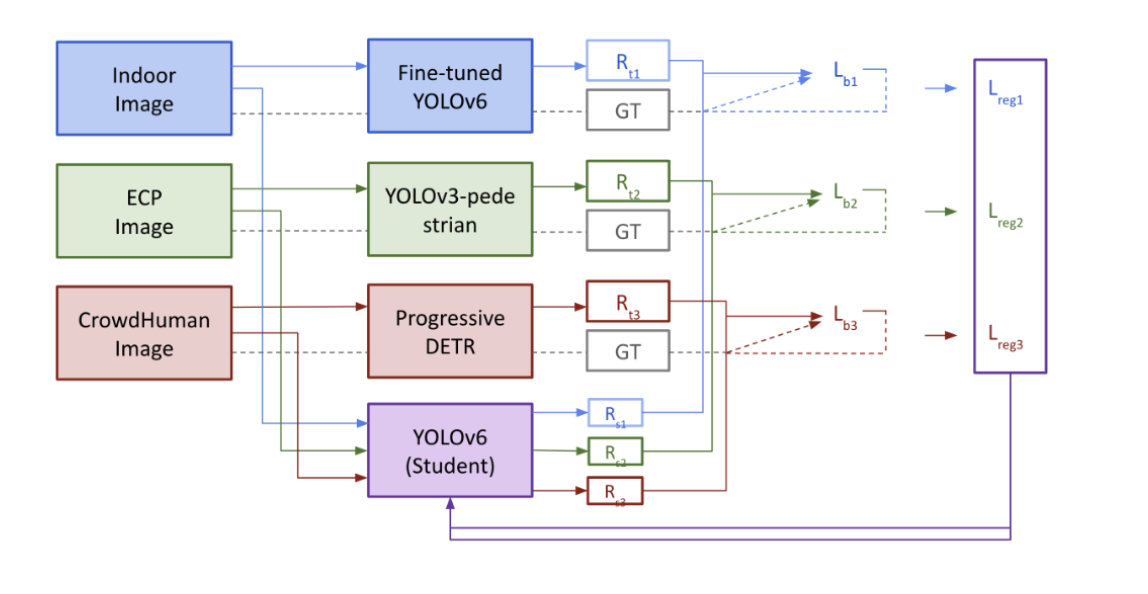
In Advanced Computer Vision, I worked on a team project exploring knowledge distillation across heterogeneous human-detection domains. Multiple domain-specific teachers produced supervision for a YOLOv6 student trained across outdoor, crowded, and indoor data.
EuroCity PersonsCrowdHumanSoft labelsYOLOv6 studentDataset balancingTraining/inference
summarizeReport
2023 · 3D Vision / Shape Analysis
3D Shape Analysis
An individual project in 3D point-cloud / medical-imaging coursework analyzed hippocampus shape variation using Procrustes alignment, iterative mean-shape estimation, PCA over aligned shapes, and principal modes of variation.
Although the application domain was medical imaging, the transferable focus was 3D vision, geometry, alignment, and shape representation.
MATLABParaViewProcrustes alignmentPCA3D geometry / shape analysis
2024 · Reinforcement Learning
DQN vs. Double DQN
For an individual Reinforcement Learning project, I implemented and compared DQN and Double DQN across CartPole, Acrobot, and MountainCar using Q-networks, target networks, experience replay, epsilon-greedy exploration, hard target updates, and GPU training.
One practical lesson came from profiling the replay pipeline: keeping the replay-buffer tensors on GPU made training slower in this implementation, so I changed the pipeline to transfer sampled batches instead.
CartPole and Acrobot were successfully trained under the tested setup, while MountainCar remained more difficult and was not solved under the same experimental configuration.
DQNDouble DQNExperience replayEpsilon-greedyGPU training
2022–2025 · Research
Motion Retargeting, Human Feedback, and Motion–Language Exploration
MR.HuBo — IROS 2024
Scalable supervised human-to-robot motion retargeting using robot-domain sampling and a human body prior.
descriptionIEEE PaperHuman-Feedback Motion Refinement
M.S. thesis work on pairwise human preferences, reward modeling, and PPO for semantic post-refinement of retargeted robot motion.
menu_bookThesisMotion–Language Alignment Prototype
A short exploratory prototype using Transformer-based motion and text representation components with cosine similarity as a semantic correspondence signal.
Where This Led
Toward Multimodal AI
Across these academic projects, the center of gravity gradually moved from mechanical systems and robotics toward learning itself: how models represent information, learn from limited or imperfect supervision, combine modalities, and adapt their behavior. That progression now informs my work in multimodal AI, vision-language models, human feedback, reinforcement learning, and adaptive AI systems.
Return to Selected Portfolio →